Academic Exchange
Frontier research in nanomaterials, catalysis, optoelectronics, energy, sensing and functional systems.
 Official conference website
Wuhan · China · 10–12 September 2026
2026 International Conference on the Industry-Academia-Research Collaboration and Application of Advanced Functional Materials
Global Collaboration Unites Strength, Interdisciplinary Innovation Advances Materials
About the conference
Wuhan Institute of Technology will host an international, hybrid conference bringing together universities, research institutes, enterprises, journals and international partners.
The programme responds to the need for deeper industry-academia-research integration and focuses on innovative talent cultivation, research-to-industry translation and international collaboration. Keynotes, thematic forums, university-enterprise dialogue and poster exchange will connect scientific ideas with real-world materials challenges.
Frontier research in nanomaterials, catalysis, optoelectronics, energy, sensing and functional systems.
Direct dialogue around enterprise needs, research translation and advanced-material applications.
Institutional partnerships and cross-border scientific exchange across Asia, Africa and beyond.
Practical pathways for moving research outcomes toward scalable technologies and industrial value.
Organizations
The official organizational structure below follows the conference manual supplied by the Organizing Committee.
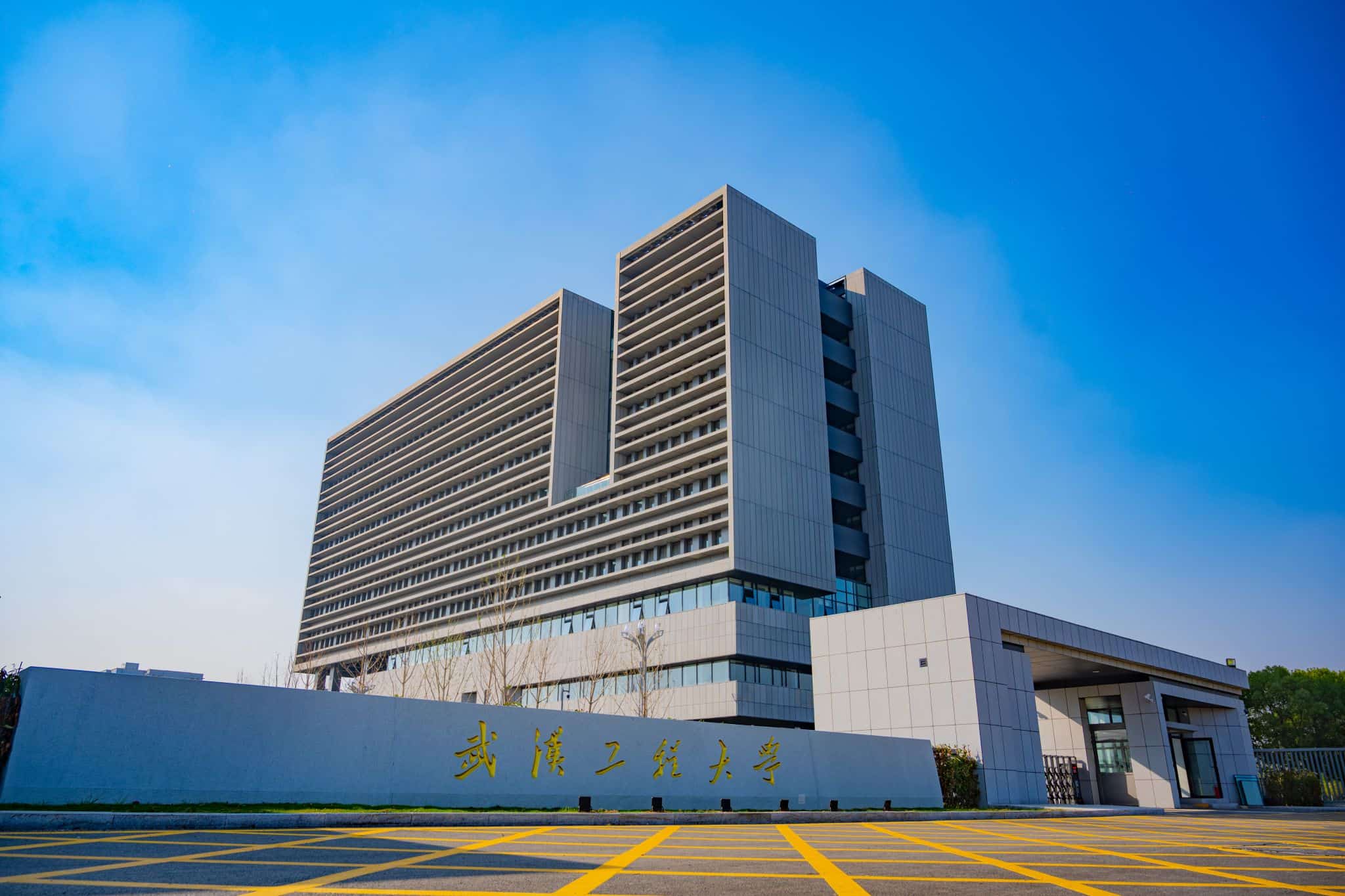


Welcome address
“Break disciplinary boundaries and connect cutting-edge research with industrial demand.”
Over three days, the conference will create space for keynote reports, special forums, group exchange and academic posters, helping participants share achievements, discuss industry trends and establish wider international cooperation.
Programme
RegistrationFirst Floor, JI Hotel (Quanji Hotel)
Welcome dinnerFor registered participants
Opening CeremonyConference Hall 102
Group Photo · Campus History Museum · Tea BreakLiufang Campus
Academic Exchange SessionConference Hall 102
LunchConference arrangement
Academic and Industry-Enterprise SessionsConference Halls 102 and 103
Closing CeremonyConference Hall 102
DinnerConference arrangement
International Project Collaboration ForumConference Hall 103
Technology Transfer ForumZhong He Lou
DepartureEnd of programme
Featured speakers
Select a speaker to view the announced report, institutional role and detailed biography.
Industry-enterprise exchange
Twelve announced enterprises and development institutions will take part in the dedicated exchange session in Conference Hall 103.

Guizhou Phosphate Chemical (Group) Co., Ltd. (China GPC) is a Tier-1 state-owned enterprise directly under the administration of the Guizhou Provincial Government. Established in 2019 through the strategic consolidation of Wengfu (Group) Co., Ltd. and Guizhou Kailin Holding (Group) Co., Ltd., China GPC commands a registered capital of RMB 6 billion and total assets of RMB 103.5 billion. Employing over 18,000 people, the Group serves as a cornerstone of the phosphate chemical industry in China.
China GPC operates at the intersection of modern agriculture and advanced materials. Its diversified portfolio encompasses modern fertilizers, fine chemicals, cathode materials for new energy batteries, electronic chemicals, and environmental solutions. The Group maintains an extensive operational footprint with major production and logistics hubs across Guizhou Province—including Fuquan, Xifeng, and Kaiyang—as well as in key industrial centers in other provinces such as Gansu, Sichuan, Fujian, Jiangsu, and Xinjiang. Its products reach all 31 Chinese provinces and autonomous regions and are exported to over 100 countries and regions. With annual import-export volume consistently surpassing USD 1 billion, China GPC ranks first among enterprises in Guizhou Province.
With roots tracing back over six decades to the birth of China’s phosphate sector, China GPC has cultivated unparalleled strengths in resource reserves, industrial scale, and technological innovation. The Group manages an annual phosphate rock mining capacity of 17 million tonnes and produces 8 million tonnes of high-concentration phosphate fertilizers, 4 million tonnes of phosphoric acid, 3 million tonnes of new energy materials and fine chemicals, 1.4 million tonnes of synthetic ammonia, and 5 million tonnes of phosphogypsum-based building materials.
Innovation remains the core driver of China GPC’s leadership. As the custodian of China’s only National Key Laboratory for phosphate chemistry, the Group has been honored with four National Science and Technology Progress Awards and holds over 2,400 patents. Its proprietary technologies lead globally in areas ranging from efficient mining and beneficiation to the purification of wet-process phosphoric acid and the high-value recovery of associated fluorine and silicon resources. Furthermore, China GPC is a pioneer in the comprehensive utilization of phosphogypsum, turning industrial by-products into sustainable assets.
Looking ahead, China GPC is committed to fulfilling the provincial mandate to build a “Double Hundred-Billion” ecosystem: evolving into a 100-billion RMB enterprise while anchoring a surrounding industrial cluster of equal scale. Anchored by its vision to become the “Hundred-Billion GPC, a World-leader,” the Group is advancing along three core tracks—modern fertilizers, fine chemicals, and new energy materials—while deepening four industrial chains focused on resource intensity, by-product recycling, and multi-element synergy. Through its flagship “51215” Product Initiative, China GPC is poised to emerge by the end of the 15th Five-Year Plan as a world-class, innovation-driven leader characterized by exceptional competitiveness, robust governance, and a prestigious international brand.

Hubei Yihua Group Co., Ltd. (hereinafter referred to as Yihua Group) was founded in 1977. As a key state-owned enterprise under the administration of Yichang Municipality, it has grown into a leading comprehensive chemical group in China after nearly 50 years of pioneering endeavor. It boasts total assets exceeding 60 billion yuan, a workforce of nearly 20,000 employees, and holds a controlling stake in the listed company Hubei Yihua (SZSE: 000422).
Yihua Group operates more than 40 production bases across the country, with proven reserves of 2.7 billion tons of mineral resources including coal, phosphate and salt deposits. Leveraging its resource endowments, the group is committed to building a green chemical industrial chain centered on new energy, new materials, new-type fertilizers and high-end chemicals, supported by smart energy and low-carbon circular utilization, with coordinated development of mine development, chemical equipment manufacturing and industrial logistics. Yihua Group has always taken scientific and technological innovation as the core driver of its development and accelerated the cultivation of new quality productive forces. It is home to a range of innovation platforms including a nationally accredited enterprise technology center, a provincial engineering technology research center, a postdoctoral research workstation and the Yihua Research Institute, and has established joint innovation centers with multiple domestic universities, research institutes and industry-leading enterprises. Keeping pace with industry frontiers and building on its solid industrial foundation, it has developed a series of world-leading iterative technologies and landmark import-substituting products. The group has been awarded the titles of national-level specialized, refined, differential and innovative “Little Giant” enterprise, excellence-grade smart factory and zero-carbon factory, and has taken the lead in launching the construction of a zero-waste group. It currently offers 25 core product categories covering modern agriculture, new energy materials, high-end equipment manufacturing, biomedicine, national defense and military industry and other fields, with a total fertilizer production capacity of 5 million tons and a total chemical production capacity of 3 million tons. With outstanding product quality, a well-established sales network and premium customer service, it delivers high-quality products and service solutions to more than 32 countries worldwide, and multiple of its products rank among the top brands both domestically and globally.
Hubei Dinglong Holdings Co., Ltd., established in 2000 and listed on the ChiNext market in 2010, has long been committed to the R&D and production of innovative core materials in key strategic sectors. As a leading player in the field of critical innovative materials, the Company has consistently placed technological innovation at the heart of its development strategy. Backed by a highly skilled R&D team and sustained, substantial investment in research and development, Dinglong has successfully developed a series of high-tech products with independent intellectual property rights in strategic domains such as semiconductor materials. The Company has broken through multiple technological bottlenecks in core materials, achieving significant breakthroughs in advanced materials.
Since its initial public offering, Dinglong Holdings has effectively leveraged capital markets to fuel its growth, while concurrently pursuing a dual-driven strategy of in-house R&D and incubation. This approach has accelerated the expansion of its industrial ecosystem and facilitated continuous technological iteration and innovation. To date, the Company has evolved into a national-level demonstration enterprise for technological innovation, a national-level demonstration enterprise for intellectual property, a Ministry of Industry and Information Technology (MIIT)-designated “Single Champion” demonstration enterprise in manufacturing, and a platform-based benchmark enterprise spearheading materials innovation across multiple industries and diverse business segments.

Wuhan EVE Energy Storage Co., Ltd., a fully-owned subsidiary of EVE Energy Co., Ltd. (Stock Code: 300014), is located in Optics Valley, East Lake High-tech Development Zone, Wuhan. It functions as the national energy storage headquarters of the EVE Group and specializes in the R&D and engineering innovation of energy storage system integration.
Centered on system-level technology development, the company boasts a complete R&D platform covering power electronics, energy management, thermal management and system verification. It drives the group’s technical iteration and product development for utility-scale, commercial & industrial, residential and marine energy storage systems, bridging cell manufacturing at Hubei Jingmen base and global system solution delivery.
Wuhan Pudi Vacuum Technology Co., Ltd. brings together over fifty professionals across multiple disciplines, including mechanical engineering, automation control, materials science, and vacuum technology. As one of the earliest high-tech enterprises in Hubei Province to engage in the R&D, design, and manufacturing of vacuum equipment, the Company boasts a 150-square-meter cleanroom laboratory, offering services such as product verification, process development, and turnkey solutions encompassing process-matched equipment provisioning.
The Company’s main product portfolio includes:

Yangtze Optical Fibre and Cable Joint Stock Limited Company (YOFC) is a world-leading provider of optical fibre preforms, optical fibres, optical cables, and comprehensive solutions. The Company primarily manufactures and sells optical fibre preforms, optical fibres, and optical cables in a broad range of standard specifications widely used in the communications industry. In addition, it offers a diverse portfolio of optical modules, specialty optical fibres, active optical cables, submarine cables, as well as radio-frequency coaxial cables and accessories, all tailored to meet specific customer requirements. YOFC also possesses full-fledged integrated systems, engineering design services, and turnkey solutions, delivering high-quality optical fibre and cable products and comprehensive solutions to the world’s communications industry and other sectors, including utilities, transportation, petrochemicals, healthcare, and beyond. With a commitment to excellence, the Company provides premium products and services to more than 100 countries and regions around the globe.

Yangtze Memory Technologies Co., Ltd. (YMTC), established in Wuhan, China in July 2016, is an IDM focusing on the design and manufacturing of 3D NAND flash memory, and is a professional advanced memory solutions provider recognized by global customers. Our products and solutions for global partners range from 3D NAND Flash memory wafers and packaged chips to embedded memory solutions, consumer and enterprise SSDs, which are widely used in mobile devices, consumer electronics, computers, servers, and data centers. On FMS 2018, YMTC debuted its groundbreaking Xtacking architecture and unleashed the potential of 3D NAND.

Hubei Wanrun New Energy Technology Co., Ltd. (stock code: 688275) was established in December 2010. It is a listed company on the Science and Technology Innovation Board, a national-level specialized and innovative “Little Giant” enterprise, a national-level high-tech enterprise, and an enterprise technology center recognized by the Hubei Provincial Development and Reform Commission, the Hubei Provincial Engineering Research Center, and the Hubei Provincial Department of Science and Technology Engineering Technology Research Center. The company is one of the earliest domestic enterprises engaged in the production and research and development of positive electrode materials for new energy batteries. It mainly produces positive electrode materials and their precursors for lithium-ion power batteries and energy storage batteries. Its products include lithium iron phosphate, iron phosphate, etc. The products are sold to well-known domestic and foreign enterprises such as CATL, BYD, Ganfeng Lithium, and Wanxiang 123. The company’s lithium iron phosphate and iron phosphate products have reached the industry’s advanced level in core data indicators. Our products continue to innovate and have a wide range of applications, constantly exploring in the directions of power, energy storage, and long-life materials. After years of technological innovation and accumulation, the product structure has been continuously optimized and performance has been continuously improved. The company has grown into an efficient, green, and environmentally friendly group company, and has established multiple production bases in Binzhou, Shandong; Anqing, Anhui; and Shiyan and Ezhou, Hubei.
Haimen sits at the mouth of the Yangtze River, just 60 kilometers from Shanghai across the river — a core node in the national Yangtze River Delta integration strategy.
Haimen’s economy is growing fast: GDP rose from 142.3 billion yuan in 2020 to 178.5 billion in 2025 — the first county-level economy in Jiangsu north of the Yangtze to pass 100 billion yuan, and 17th among China’s Top 100 Districts.
Haimen’s transport links keep improving: eight river crossings, 26-minute high-speed rail to Shanghai from next year, a 10-minute tunnel from 2028, and the new Nantong Airport run as one system with Pudong and Hongqiao.
Haimen’s industry follows a “5+2+X” system — five pillars from advanced metals to high-end textiles, plus IT, new energy, and new fields like AI. Zenith Steel, China Merchants Heavy Industry, Biocytogen, and Easpring have all settled in Haimen.
Haimen has three development zones and 21 innovation parks, home to more than 2,000 companies from over 20 countries.
Choosing Haimen means choosing a strategic high ground in the Yangtze River Delta; investing in Haimen means staying ahead.

Hubei Carbon Six Technology Co., Ltd. is a technology-driven enterprise integrating the R&D, production, and sales of CVD single-crystal diamond products. Founded in 2017, the Company is situated in the Three Gorges International Jewelry Expo Park in Hubei Province. The Company employs plasma-enhanced chemical vapor deposition (PECVD) technology to synthesize large-size single-crystal diamond products, enabling the industrial application of domestically produced large-size single-crystal diamonds. Its product portfolio currently encompasses four grades: industrial, optical, electronic, and gemstone, which find widespread application in ultra-precision machining, aerospace, semiconductor devices, optical windows, thermal management components, quantum computers, and jewelry, among other fields.

Beijing Merry Change Technology Co., Ltd. (abbreviated as MC) was founded in March 2018, with its headquarters located in Guoxin Park, Peking University Medical Innovation Valley, Changping District, Beijing. We are a high-tech enterprise integrating the R&D, manufacturing, sales and service of scientific research instruments. Centered on the photocatalysis industry, we are committed to in-depth vertical development and comprehensive horizontal expansion in the fields of environmental remediation, new energy, new materials and carbon neutrality. We have obtained the qualification certifications of Zhongguancun High-tech Enterprise and National High-tech Enterprise, AAA Enterprise Credit Rating Certificate, ISO9001 Quality Management System Certification, ISO45001 Occupational Health and Safety Management System Certification, ISO14001 Environmental Management System Certification, as well as a number of utility model patents and invention patents.
In the technical research and development of photocatalytic experimental equipment, we continuously overcome technical challenges and provide integrated overall experimental equipment solutions featuring more stable operation and easier operation for experiments including photocatalytic pollutant degradation, photocatalytic water splitting for hydrogen and oxygen production or overall water splitting, photocatalytic carbon dioxide reduction, photocatalytic ammonia synthesis (nitrogen fixation), as well as photocatalytic degradation of VOCs and formaldehyde.

Henan VAN-research Composite Materials Research Institute Co., Ltd. (VAN-research Institute) was established in October 2014 and comprises three major divisions. The institute supports the transformation from “Made in China” to “Created in China” by building an integrated platform for industry-academia-research-application in new materials, covering R&D, testing, investment and financing, project cooperation, and talent exchange. It also aims to forge an international innovation incubation platform to bolster the innovative development of national strategies and enterprises.
VAN-research Intelligence Technology (Zhengzhou) Co., Ltd., established in 2020, is a renowned domestic R&D-oriented testing institution. “eTest” is a scientific research service platform developed by VAN-research Intelligence, dedicated to providing efficient and accurate testing and research services for universities, research institutes, and R&D enterprises.
R&D experimental centers have been established in multiple locations including Zhengzhou, Beijing, Shanghai, and Xi’an, focusing on four key industrial chains: aerospace, new energy, semiconductors, and life sciences. These centers provide customers with comprehensive and convenient industry-specific technical solutions to meet their diverse needs, such as R&D innovation, process optimization, product certification, and industrial upgrading.
Supporting journals
Journal participation and descriptions are presented from the conference manual.
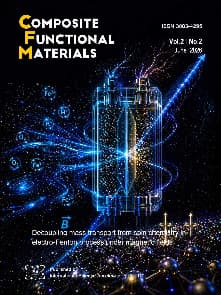
Composite Functional Materials (Compos. Funct. Mater., CFM) is an English-language interdisciplinary journal based in China, co-published by the International Science Accelerator (ISA), Higher Education Press (HEP) and Tsinghua University Press on the SciOpen platform. Serving researchers across chemistry, physics, materials science, engineering and biology, it disseminates transformative advances in the design, fabrication and real-world application of functional composite materials.
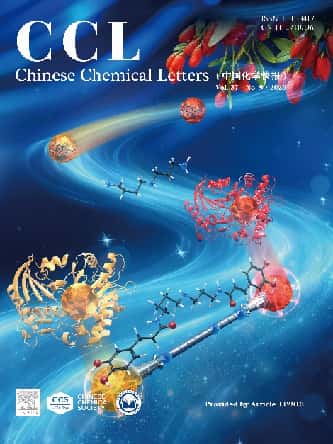
Chinese Chemical Letters (CCL) (CN11-2716/O6, ISSN 1001-8417) was founded in July 1990. It is a monthly English peer-reviewed journal, which publishes mini-reviews and research articles in all areas of chemistry, especially hot topics. The journal does not accept articles previously published or scheduled to be published. CCL is a journal superintended by China Association for Science and Technology, and sponsored by Chinese Chemical Society and Institute of Materia Medica, Chinese Academy of Medical Sciences. Editor-in-Chief, Prof. Xu-Hong Qian, is a member of Chinese Academy of Engineering, and Prof. Remi Chauvin (University de Toulouse) is the co-Editor in Chief.
CCL has been indexed by Science Citation Index-Expanded since 1996. Based on JCR, the total citation and impact factor of the CCL in 2025 are 44075 and 9.5, respectively, ranked No. 41 (Q1 quartile) among 250 journals in chemistry-multidisciplinary. CiteScore in Scopus of 2025 is 16.6, ranked 28 among 402 journals in general chemistry. The journal is also indexed or abstracted by Chemical Abstract, Chemical Citation Index, Research Alert, etc.
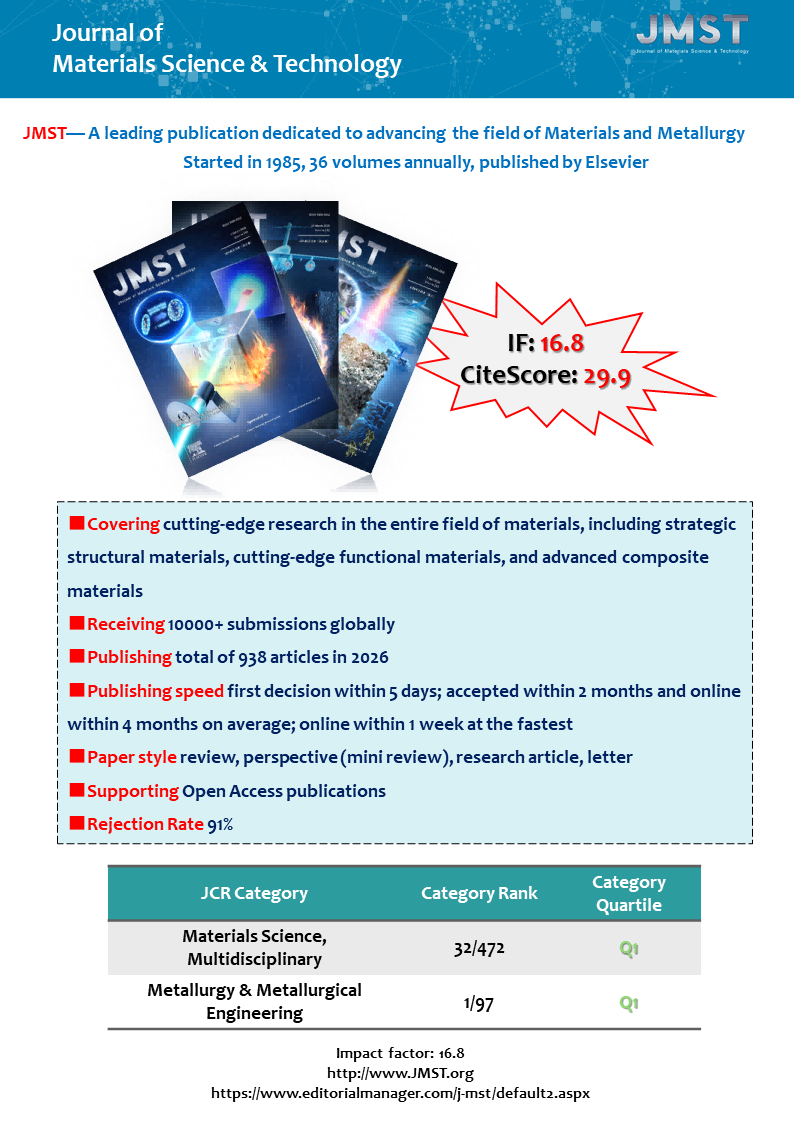
JMST- A leading publication dedicated to advancing the field of Materials and Metallurgy.
Started in 1985, 36 volumes annually, published by Elsevier.
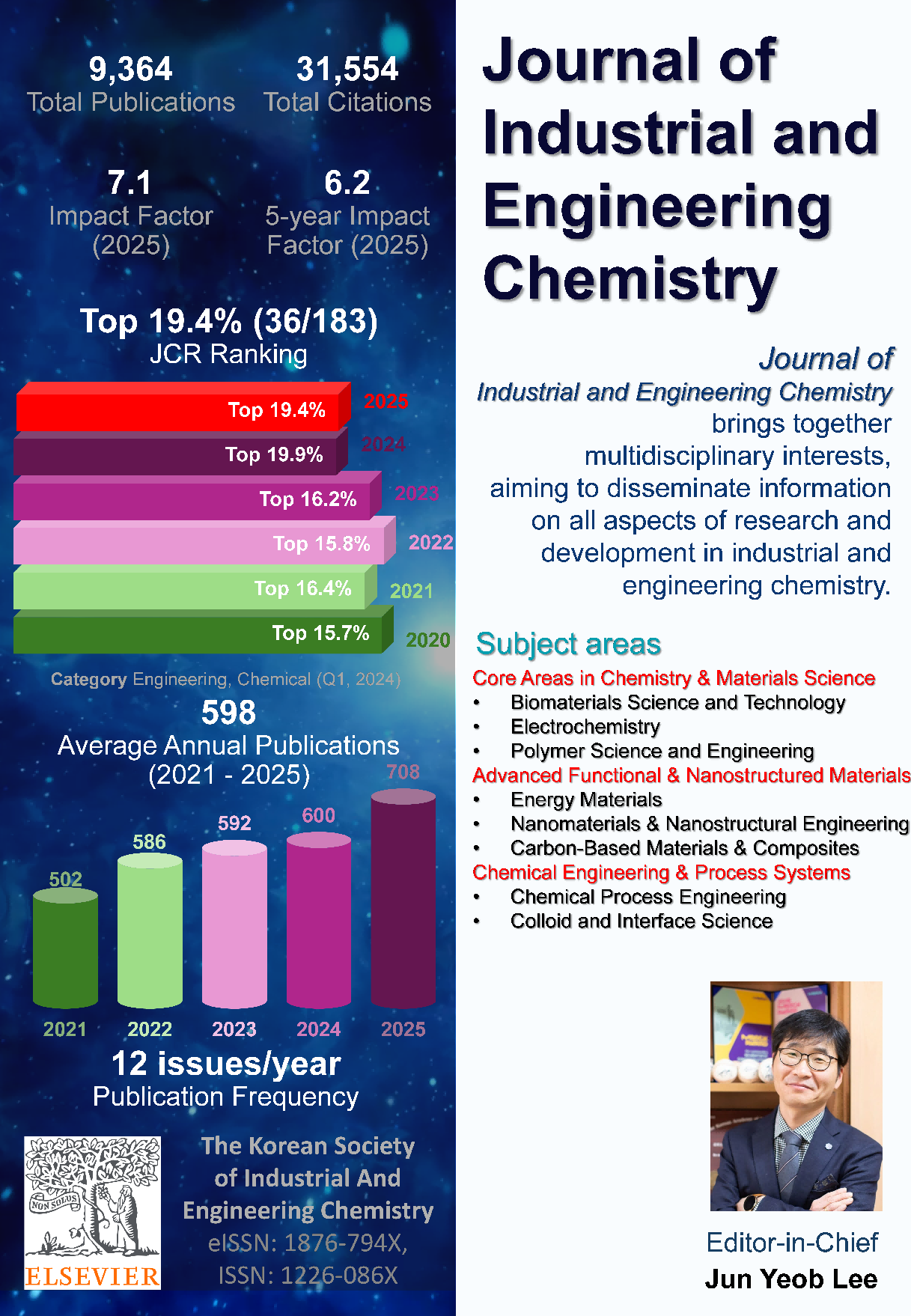
brings together multidisciplinary interests, aiming to disseminate informationon all aspects of research anddevelopment in industrial andengineering chemistry.
Subject areas
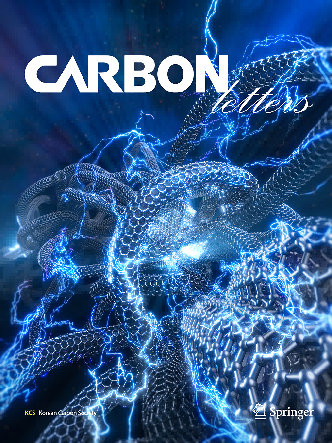
Carbon Letters is the official international journal of the Korean Carbon Society, dedicated to publishing high-quality research across the full spectrum of carbon science and technology. Since its launch in 2000, the journal has served as a global platform for innovative research on carbon materials, carbon-rich molecules, and their applications in energy, environment, and advanced technologies.
Aims & Scope
Carbon Letters welcomes original research, reviews, and perspectives in all areas of carbon science, including:
Carbon Letters is committed to advancing carbon science by publishing impactful research that bridges fundamental discoveries with practical applications for a sustainable future.
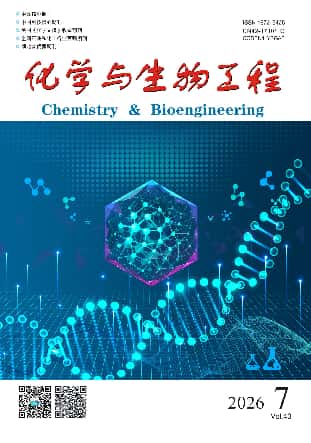
Chemistry & Bioengineering is a Chinese core scientific and technical journal. Founded in 1984 and renamed in 2003, it is supervised by the Department of Education of Hubei Province and co-organized by Wuhan Institute of Technology, Hubei Provincial Chemistry and Chemical Engineering Society, and other provincial institutes, covering chemistry, chemical engineering, and bioengineering with both domestic and international circulation.
The journal prioritizes academic quality and innovation, reporting scientific achievements in biochemical engineering, pharmaceutical chemistry, and clean technologies, with its main sections including Review, Research, Development & Application, and Analysis & Determination. Its Editorial Board comprises 4 academicians and 41 senior experts.
The journal is included in prestigious databases such as “China Science Core Journals” (since 2004), RCCSE Core Journals (since 2009), and Peking University’s “Chinese Core Journals Directory” (2023), ranking in the Q1 zone of chemical engineering influence index. It has organized 8 sessions of the “Hubei Province Young Scientists Forum” since 2015 and received numerous honors, including the First Prize of the 8th “National Petroleum and Chemical Industry Excellent Periodicals” (2015).
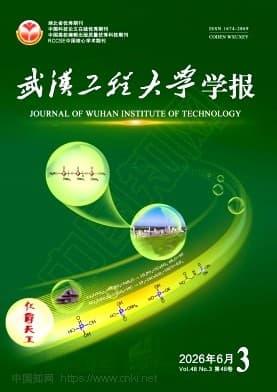
Journal of Wuhan Institute of Technology is a comprehensive academic journal focusing on science and technology, sponsored by Wuhan Institute of Technology and administered by the Department of Education of Hubei Province. First launched in 1979 under the original title Journal of Wuhan Institute of Chemical Technology, it adopted its current name in 2007. Distributed both domestically and internationally, the journal bears the domestic unified serial number CN42-1779/TQ and the International Standard Serial Number ISSN 1674-2869.
Committed to facilitating academic exchanges in engineering technology and cultivating high-caliber engineering and scientific talents, the journal prioritizes publishing original innovations and latest research advances across chemistry, materials science, engineering, environmental science and ecology. It strives to underpin the high-quality development of engineering and fundamental sciences in China.
The journal has been indexed by more than ten authoritative abstract journals and core databases worldwide, including Chemical Abstracts (CA) and Japan Science and Technology Agency Database (JST). Its comprehensive impact index has climbed year by year in the ranking of Chinese scientific and technical journals. According to statistics from CNKI (Annual Report on Impact Factors of Chinese Academic Journals: Natural Science and Engineering Technology), its impact factor rose to 0.963 in the 2023 edition.
Recognized as one of the first batch of official scientific and technical academic journals certified by the State Administration of Press, Publication, Radio, Film and Television of China, the journal has earned numerous honors over the years. Its editorial team was awarded the Excellent Editorial Team of Chinese University Sci-Tech Journals in 2017 and 2019. It was honored as an Excellent Sci-Tech Journal of Hubei Province in 2020 and an Advanced Collective by the Hubei Society of Sci-Tech Journal Editors in 2021. It has repeatedly won the title of Excellent Sci-Tech Journal for Editorial and Publication Quality among Chinese Universities, and has received more than ten provincial-level and higher awards in the past decade.
Academic Committee
The committee combines international contributors with academic and research leaders from Wuhan Institute of Technology and partner institutions.
Conference information
Conference contacts
Registration
Submit one registration for each participant. Completing the form sends your details to the Organizing Committee for review and coordination.
Registration form
Please complete the registration form. Registered participants will receive conference updates and access information by email.